Preferred Painting’s Commercial Surface Restoration Services: 30 Years, One Contractor
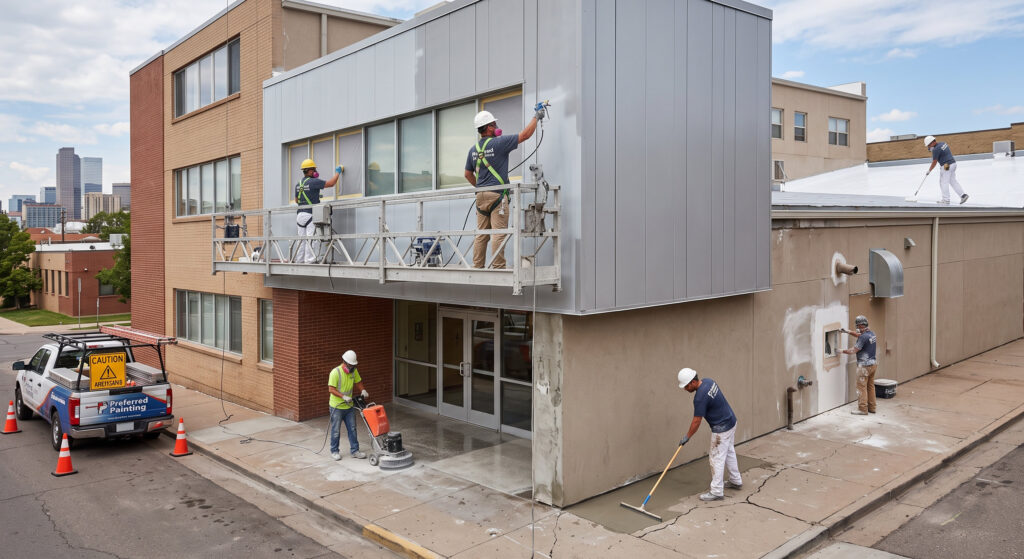
For property managers, facility directors, and commercial real estate teams, maintaining a building is rarely about one isolated service. A lobby may need terrazzo restoration while adjacent drywall requires repair.
Parking structures may need concrete resurfacing at the same time roof coatings are approaching the end of their lifecycle. Coordinating multiple vendors for each trade often leads to inconsistent communication, scheduling conflicts, and uneven workmanship.
That is why many commercial clients seeking commercial surface restoration Denver solutions increasingly prioritize long-term contractor relationships over transactional project bidding. They want a partner capable of managing the full condition of a property over time, not just completing a single scope of work.
For more than 30 years, Preferred Painting has built its reputation around that exact model. The company’s work extends far beyond commercial painting alone. Today, we provide integrated restoration and maintenance services across painting, drywall, terrazzo, stone, concrete, and roof coating systems for commercial facilities throughout the Denver metro area.
The result is a single contractor relationship that simplifies project management while helping owners and operators protect the long-term value of their properties.
What is Commercial Surface Restoration?
Commercial surface restoration is the process of repairing, refinishing, preserving, and upgrading the visible and structural surfaces within a commercial property. Unlike simple cosmetic painting, restoration work addresses wear, environmental exposure, aging materials, and operational damage that accumulate over time in high-traffic buildings.
A comprehensive restoration contractor may handle interior and exterior commercial painting. Alongside that, they also focus on concrete repair and resurfacing, terrazzo refinishing and polishing, and natural stone restoration.
Moreover, for structural details, a comprehensive restoration will also include drywall repair and texture matching, roof coatings and protective systems, and surface preparation and protective finishes.
For large commercial facilities, these services often overlap. A building renovation rarely affects just one surface type. Coordinating restoration under one contractor helps reduce downtime, improve accountability, and maintain consistency throughout the property.
Why Commercial Clients Prefer One Restoration Contractor?
Large commercial properties operate on tight schedules and even tighter operational constraints. Office buildings, healthcare facilities, multifamily developments, industrial properties, and retail centers cannot afford extended disruptions caused by fragmented contractor coordination.
Working with a single commercial painting and restoration contractor that Denver property owners trust offers several advantages.
Simplified Communication
One of the biggest frustrations in commercial restoration projects is managing multiple vendors simultaneously. Different contractors often operate on different timelines, use different project management systems, and shift responsibility when problems arise.
With a unified restoration contractor, property managers have a single point of accountability. Communication becomes more efficient because scheduling, logistics, material coordination, and project sequencing occur internally rather than through multiple external vendors.
This becomes especially valuable during phased renovations where painting, drywall, flooring restoration, and concrete work must occur in a precise order.
Consistent Quality Standards
Commercial facilities rely heavily on visual consistency. Inconsistent finishes between trades can immediately affect tenant perception and brand presentation.
An integrated contractor maintains unified quality control standards across every service category. Surface preparation, finish expectations, safety protocols, and project documentation remain consistent throughout the project lifecycle.
For Class A office buildings and premium commercial properties, that consistency matters significantly.
Reduced Operational Downtime
Downtime directly impacts tenants, visitors, employees, and revenue generation. Coordinated scheduling between multiple trades can quickly become a logistical problem when projects involve occupied spaces.
An experienced restoration contractor understands how to sequence work efficiently to minimize disruption. Night work, phased scheduling, and rapid turnaround capabilities are easier to manage when a single contractor oversees the entire process.
Long-Term Facility Knowledge
The longer a contractor works with a facility, the more valuable institutional knowledge they develop. They understand prior repairs, substrate conditions, coating systems, building traffic patterns, and recurring maintenance concerns.
That historical knowledge allows for more proactive planning and more accurate restoration recommendations over time.
A 30-Year Commercial Legacy in Denver
Longevity matters in commercial construction and restoration. Commercial clients want contractors who understand building systems, communicate professionally, and remain accountable years after a project is completed.
Preferred Painting’s three decades of experience in the Denver market position the company differently from many single-service contractors. Over that time, the company has worked with commercial real estate firms, property management groups, facility operators, and enterprise clients across a wide range of industries.
That experience includes relationships with organizations such as JLL, Callahan, and Transwestern.
These types of commercial partnerships are rarely built solely through low-cost bidding. They are built through reliability, responsiveness, and the ability to manage complex scopes repeatedly over time.
In the commercial restoration industry, repeat business is often the clearest indicator of trust.
Commercial Painting that Goes Beyond Appearance
Painting remains one of the most visible aspects of commercial restoration, but professional commercial painting involves far more than aesthetics alone.
Proper coating systems protect buildings from moisture intrusion, UV degradation, temperature fluctuation, and daily operational wear. Poor preparation or incorrect product selection can shorten the lifespan of finishes dramatically.
Preferred Painting’s commercial painting services support a broad range of facility needs, including:
- Tenant improvement projects
- Interior office renovations
- Exterior repainting programs
- High-performance coatings
- Industrial coatings
- Common area refreshes
- Maintenance painting cycles
Commercial painting also plays a major role in tenant retention. Well-maintained common areas, corridors, lobbies, and exteriors directly influence how tenants perceive a property’s professionalism and management quality.
Property managers seeking ongoing maintenance support often benefit from partnering with a contractor capable of handling both aesthetic upgrades and broader restoration projects simultaneously.
For facilities requiring ongoing maintenance programs, the company’s commercial painting solutions integrate naturally with broader restoration planning through Preferred Painting’s commercial services.
Concrete and Terrazzo Restoration for High-Traffic Facilities
Concrete and terrazzo surfaces experience constant wear in commercial environments. Foot traffic, equipment movement, moisture exposure, de-icing chemicals, and cleaning products all contribute to surface deterioration over time.
Restoration extends the life of these surfaces while improving safety and appearance.
Concrete restoration may include crack repair, resurfacing, polishing, sealing, patching, or the application of a protective coating. In commercial facilities, damaged concrete creates more than just cosmetic concerns.
Surface failures can become safety liabilities and accelerate structural deterioration if left untreated. Commercial concrete restoration is especially important in parking garages, industrial facilities, loading areas, sidewalks and walkways, commercial entryways, and warehouse environments.
According to the American Concrete Institute, preventative maintenance and early surface repair significantly improve concrete lifecycle performance and reduce long-term repair costs.
Meanwhile, Terrazzo remains one of the most durable flooring systems used in commercial buildings, but it still requires professional maintenance to preserve its appearance. Over time, terrazzo can lose its shine, develop scratches, accumulate stains, or exhibit uneven wear in high-traffic areas.
Professional terrazzo restoration may involve diamond grinding, honing and polishing, stain removal, crack repair, sealing, and protective treatments. For commercial lobbies, educational facilities, airports, and healthcare buildings, terrazzo restoration can dramatically improve presentation without the expense of complete replacement.
Stone Restoration and Specialty Surface Care
Natural stone surfaces require specialized restoration methods that differ substantially from standard painting or flooring work. Improper cleaning agents or aggressive restoration techniques can permanently damage stone finishes.
Commercial stone restoration commonly includes marble polishing, granite refinishing, limestone cleaning, surface honing, stain treatment, and protective sealing. These surfaces are frequently found in premium commercial properties where presentation standards are especially high.
Since Preferred Painting manages multiple restoration disciplines internally, projects involving stone, drywall, painting, and adjacent surface work can be coordinated more efficiently without relying on disconnected specialty vendors.
Drywall Restoration and Interior Repair Work
Commercial drywall damage often occurs gradually through tenant turnover, facility modifications, moisture exposure, and daily operational use.
In occupied commercial spaces, poorly repaired drywall is immediately noticeable. Texture inconsistencies, visible seams, flashing, and uneven finishes can diminish the appearance of otherwise professional interiors.
Comprehensive drywall restoration includes crack repair, water damage restoration, texture matching, surface smoothing, joint repair, and full repainting integration. This type of work becomes particularly important during tenant improvements and commercial remodeling projects where walls must blend seamlessly into existing finishes.
Integrated drywall and painting capabilities also help accelerate project timelines by allowing repairs and finishing to be coordinated under a single schedule.
Roof Coatings as Part of Long-Term Building Protection
Roof coatings are increasingly used in commercial facilities to extend roof lifespan, improve energy performance, and delay full replacement costs. Protective coating systems help shield roofing materials from UV exposure, ponding water, and the thermal expansion cycles common in Colorado’s climate.
Commercial roof coatings may offer benefits such as reduced heat absorption, improved waterproofing, extended roof service life, lower maintenance costs, and improved energy efficiency.
The U.S. Department of Energy notes that reflective roofing systems can help reduce cooling loads in commercial buildings, particularly in large facilities with substantial roof exposure.
When roof coatings are managed alongside broader restoration programs, property managers gain a more cohesive preventative maintenance strategy rather than reacting to isolated failures as they occur.
The Importance of Relationship-Based Commercial Contracting
The commercial restoration industry often becomes overly focused on acquiring low-bid projects. While pricing always matters, long-term property performance depends heavily on contractor reliability, responsiveness, and consistency.
Relationship-based contractors approach projects differently. Instead of treating work as isolated transactions, they focus on understanding the broader operational goals of the property owner or management team.
That relationship-centered approach typically results in better long-term maintenance planning with faster response times and more accurate budgeting. It also improves project continuity while reducing administrative burden and ensuring greater accountability.
For commercial property managers overseeing multiple buildings, these advantages become increasingly valuable over time.
Preferred Painting’s long-standing relationships with enterprise clients reflect this model. The company’s role extends beyond completing individual scopes of work. It becomes part of the ongoing operational infrastructure supporting the property itself.
Why Denver Facilities Require Specialized Restoration Expertise?
Denver’s climate creates unique challenges for commercial surfaces. Intense UV exposure, freeze-thaw cycles, snow-removal chemicals, rapid temperature changes, and high-altitude environmental conditions all accelerate surface wear in ways that differ from many other regions.
Commercial restoration contractors operating in Colorado must understand how these environmental factors affect exterior coatings, concrete performance, roof systems, sealants, surface adhesion, and moisture migration.
Selecting the wrong products or preparation methods can significantly shorten restoration lifespans. That regional expertise becomes particularly important for large-scale commercial facilities where restoration investments are substantial and long-term durability matters.
Work with a Commercial Restoration Partner Built for Long-Term Relationships
Commercial properties require more than isolated repair projects. They require coordinated maintenance strategies, dependable communication, and contractors capable of managing evolving facility needs over time.
For organizations seeking a trusted provider of commercial surface restorationservices in Denver, Preferred Painting offers integrated restoration expertise backed by more than three decades of commercial experience.
Whether your facility requires painting, drywall repair, terrazzo restoration, concrete resurfacing, or roof coatings, working with a single contractor relationship can simplify operations while protecting long-term property value.
FAQ
What does commercial surface restoration include?
Commercial surface restoration includes repairing, refinishing, and protecting surfaces throughout a commercial property. Services may involve painting, drywall repair, concrete restoration, terrazzo refinishing, stone polishing, and roof coatings, depending on the facility’s needs.
Why should property managers use one restoration contractor?
Using one contractor improves communication, scheduling, accountability, and consistency across projects. It also reduces the coordination burden associated with managing multiple specialty vendors simultaneously.
How often should commercial buildings undergo restoration work?
Most commercial properties require ongoing maintenance and periodic restoration depending on traffic levels, environmental exposure, and material types. High-traffic facilities often benefit from annual inspections and scheduled preventative maintenance programs.
What are the benefits of commercial roof coatings?
Commercial roof coatings help extend roof lifespan, improve waterproofing performance, reduce UV damage, and support better energy efficiency in large commercial facilities.
Why is Denver’s climate hard on commercial surfaces?
Denver’s altitude, UV exposure, freeze-thaw cycles, snow, and rapid temperature fluctuations accelerate wear on coatings, concrete, roofing systems, and exterior finishes. Proper restoration materials and preparation are critical for durability.