The Property Manager’s Guide to Choosing a Commercial Painting Contractor in Denver
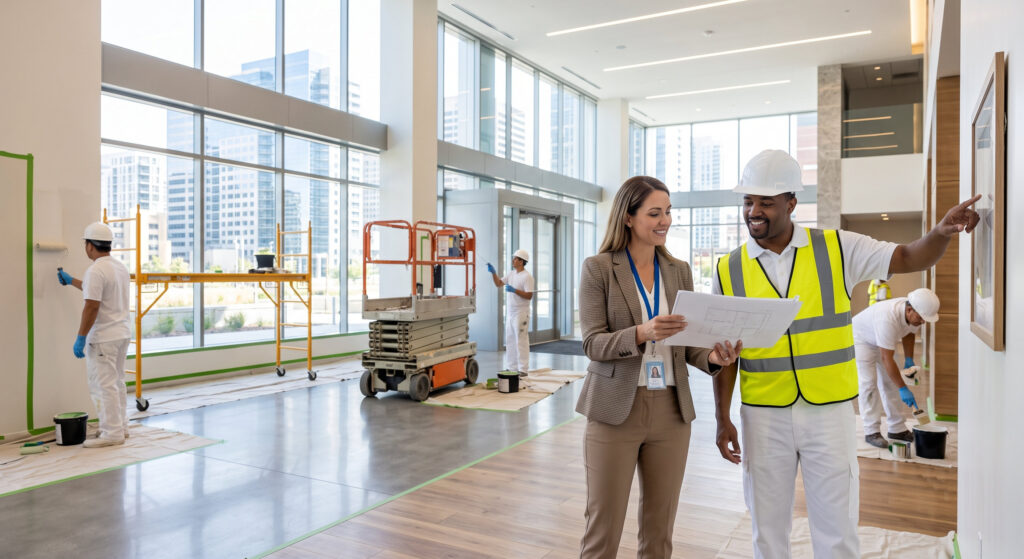
Choosing the right commercial painting contractor Denver property managers can rely on is about far more than comparing bids. In Colorado’s competitive commercial real estate market, painting contractors directly affect tenant satisfaction, operational efficiency, building appearance, and long-term maintenance costs.
Property managers overseeing office buildings, retail centers, industrial facilities, healthcare campuses, and multifamily communities need vendors who understand the realities of occupied commercial environments.
For property managers researching how to choose painting contractor property management Colorado, the decision often comes down to trust, communication, safety, scheduling flexibility, and proven experience with commercial facilities.
A low-cost contractor who disrupts tenants, misses deadlines, or fails to meet insurance requirements can create expensive operational problems that extend far beyond the paint itself. This guide explains what Denver property managers should evaluate before hiring a commercial painting contractor.
This must include licensing considerations, insurance standards, industry affiliations, scheduling capabilities, and the qualities that distinguish long-term commercial partners from short-term bidders.
What is a Commercial Painting Contractor?
A commercial painting contractor specializes in painting and surface maintenance services for commercial and institutional properties. Unlike residential painters, commercial contractors are equipped to manage larger-scale projects, coordinate around tenant occupancy, comply with commercial safety requirements, and execute projects within strict operational schedules.
Commercial painting contractors often work across a wide range of property types, including office buildings, retail centers, industrial facilities, healthcare environments, schools and universities, hospitality properties, HOA and multifamily communities, as well as warehouses and distribution centers.
An experienced commercial contractor also understands how coatings, scheduling, safety procedures, and communication impact building operations and tenant relationships. This is particularly important in Denver, where weather conditions, altitude, UV exposure, and seasonal temperature swings can affect paint performance and project timelines.
For property managers, selecting the right contractor means finding a vendor capable of protecting both the building asset and the tenant experience.
Why the Right Painting Contractor Matters for Property Management?
Commercial painting is not simply cosmetic maintenance. For many Denver properties, painting directly impacts occupancy rates, tenant retention, leasing appeal, and capital planning.
A poorly managed painting project can lead to tenant complaints, business interruptions, safety violations, delayed leasing activity, premature coating failure, and long-term damage to the property’s reputation.
On the other hand, a professional contractor helps property managers maintain operational continuity while improving the appearance and longevity of the building.
Experienced firms like Preferred Painting understand that property management requires coordination, responsiveness, and flexibility. The painting process must adapt to tenant schedules, loading dock access, security procedures, and after-hours requirements without creating unnecessary disruption.
For Class A office properties and TOBY-certified buildings in particular, vendor professionalism becomes part of the overall tenant experience.
Licensing Requirements for Commercial Painting Contractors in Colorado
One of the first questions property managers should ask is whether the contractor meets all state and local requirements.
Colorado does not issue a statewide painting contractor license in the same way some other states do. However, contractors may still need local business licensing, registration, and compliance depending on the municipality and project scope.
Property managers should verify active business registration in Colorado and proper tax compliance. They should also consider local licensing requirements for Denver-area jurisdictions.
Managers focus on OSHA safety compliance, including workers’ compensation coverage and commercial general liability insurance. You can review Colorado business registration information through the Colorado Secretary of State and workplace safety standards through OSHA.
A professional contractor should willingly provide documentation without hesitation. If a company avoids questions about licensing or insurance, that is usually a warning sign.
Insurance Requirements Property Managers Should Look For
Insurance is one of the most important screening criteria when evaluating commercial painting vendors.
Commercial properties expose contractors to elevated risks that residential painters may not fully understand. Lift equipment, occupied spaces, parking structures, stairwells, and high-traffic common areas all create liability exposure.
At a minimum, property managers should request general liability insurance, workers’ compensation insurance, auto liability coverage, and umbrella or excess liability coverage for larger projects.
Many commercial properties require contractors to carry at least $1 million to $2 million in general liability coverage. Larger institutional projects may require higher limits. Contractors should be able to name property ownership groups and management companies as additional insureds when requested.
Experienced commercial contractors already understand these requirements because they routinely work with institutional ownership groups, REITs, asset managers, and commercial property teams.
Why Nights-and-Weekend Availability Matters?
One of the biggest differences between residential and commercial painting is scheduling flexibility. Tenant-occupied properties cannot always accommodate daytime work.
Office tenants, healthcare environments, retail businesses, and hospitality properties often require contractors to work evenings, overnight shifts, or weekends to minimize disruption.
This flexibility is especially important for lobby painting, hallway repainting, retail storefronts, parking garage projects, common area upgrades, tenant improvement work, healthcare facilities, and shared workspace environments.
Property managers should ask contractors detailed scheduling questions during the bidding process. These can include:
- Can crews work overnight if needed?
- Are weekend shifts available?
- How are noise-sensitive areas handled?
- What communication procedures exist for tenants?
- How does the contractor coordinate building access?
A contractor may offer a lower bid but create operational headaches if they cannot adapt to occupancy requirements. Companies experienced in commercial environments understand that protecting tenant relationships is just as important as completing the paint work itself.
The Importance of Experience with Occupied Commercial Buildings
Commercial painting projects require far more coordination than many people realize.
In occupied facilities, contractors must manage elevator scheduling, access restrictions, security checkpoints, HVAC considerations, odor control, tenant communication, dust containment, emergency egress compliance, and noise management.
This operational awareness separates experienced commercial firms from general painters attempting to enter the commercial market.
Property managers should ask potential contractors about their previous work on multi-tenant office buildings, active retail environments, healthcare campuses, educational facilities, industrial operations, and high-rise properties.
A contractor familiar with occupied commercial buildings will already have systems for communication, scheduling, and issue resolution.
Why BOMA and Industry Memberships Matter?
Professional affiliations can provide additional confidence when evaluating contractors. Organizations such as BOMA International and local commercial real estate associations help establish professional standards across the property management industry.
Membership in organizations like BOMA often signals that a contractor actively participates in the commercial real estate community rather than operating solely as a transactional vendor. For property managers, this matters because commercial real estate relationships are built on reputation, consistency, and long-term trust.
Contractors involved in industry organizations are often more familiar with building management expectations, tenant retention priorities, asset preservation strategies, commercial safety standards, and operational coordination.
Similarly, familiarity with TOBY-certified buildings can indicate experience working within higher operational and presentation standards.
What TOBY-Certified Buildings Look for in Vendors?
The Outstanding Building of the Year (TOBY) Awards recognize excellence in commercial building management and operations. Buildings pursuing or maintaining TOBY recognition typically hold vendors to exceptionally high standards.
Painting contractors working in these environments are also expected to demonstrate strong safety protocols, professional appearance, reliable scheduling, clean jobsite management, detailed communication, high-quality finishes, and minimal tenant disruption.
Property managers overseeing premium office assets often prioritize vendors who understand these expectations from the beginning. A contractor’s ability to coordinate effectively with engineering teams, janitorial vendors, security staff, and tenant coordinators becomes just as important as technical painting ability.
Questions Property Managers Should Ask Before Hiring a Contractor
When interviewing commercial painting contractors, property managers should look beyond price alone. Some important questions they should include in their research can be:
How long have you worked on commercial properties?
Commercial experience matters because operational requirements differ significantly from residential projects. Long-term commercial work usually indicates stronger systems, better planning, and proven reliability in complex environments. It also reflects a contractor’s ability to handle large-scale scheduling and coordination challenges.
Can you provide references from Denver property managers?
References from comparable commercial properties help validate reliability and communication quality. They also provide insight into how the contractor performs under real operating conditions. Speaking directly with past clients can reveal consistency in timelines and workmanship.
What safety procedures do your crews follow?
Professional contractors should have documented safety protocols, OSHA compliance procedures, and training standards. This ensures crews are prepared to work safely in occupied and high-traffic environments. Strong safety systems also reduce risk for tenants, staff, and property owners.
How do you minimize disruption in occupied buildings?
Experienced contractors should explain scheduling, containment, communication, and cleanup processes clearly. This includes planning work around tenant schedules and sensitive operational areas. Effective disruption control helps maintain tenant satisfaction throughout the project.
Who supervises the project onsite?
Dedicated project management improves accountability and communication throughout the job. On-site supervisors ensure quality control and quick issue resolution during active work. They also act as the main point of contact for property management teams.
What products do you recommend for Colorado weather conditions?
Denver’s UV exposure, freeze-thaw cycles, and dry climate require appropriate coating systems for durability. Experienced contractors will select materials designed for long-term performance in local conditions. Proper product selection reduces maintenance frequency and extends coating lifespan.
Why Long-Term Vendor Relationships Matter?
Many property managers eventually realize that the lowest bidder often becomes the most expensive option over time. Reliable commercial contractors provide value through consistent communication, faster response times, institutional knowledge of the property, and predictable project execution.
This ensures reduced tenant complaints, better warranty support, and preventive maintenance planning. Long-term vendor relationships also streamline budgeting and capital improvement planning.
Rather than approaching each project as a one-time transaction, experienced contractors work collaboratively with property teams to develop maintenance strategies that protect building assets over time.
This relationship-focused approach is one reason many Denver property managers continue partnering with established commercial firms for years across multiple properties.
How Preferred Painting Supports Denver Property Managers?
For more than 30 years, Preferred Painting has worked with commercial property managers throughout the Denver market on projects ranging from office interiors to large-scale exterior restorations.
The company’s commercial experience includes coordination with tenant-occupied facilities, flexible scheduling for nights and weekends, and long-term maintenance partnerships designed around operational continuity.
Property managers looking for commercial repainting, surface restoration, tenant improvement painting, exterior coating systems, common area upgrades, and ongoing maintenance painting can benefit from working with experienced commercial contractors.
can benefit from working with a contractor that understands the operational realities of commercial property management. You can also explorePreferred Painting’s commercial painting services and learn more about their experience with large-scale commercial environments.
Choosing the right commercial painting partner can improve tenant satisfaction, protect property value, and reduce long-term maintenance costs. If you are evaluating vendors for your commercial property portfolio, Preferred Painting offers decades of experience supporting Denver property managers.
We provide flexible scheduling, professional project coordination, and high-quality commercial painting services designed for occupied environments. Contact Preferred Painting to discuss your next commercial painting or surface restoration project in the Denver area.
Frequently Asked Questions
Why should property managers consider a contractor’s experience with occupied commercial buildings?
Occupied buildings require careful coordination around tenant schedules, access restrictions, noise management, and safety protocols. Contractors with this experience minimize disruption and help maintain tenant satisfaction.
What insurance coverage should a commercial painting contractor carry?
At a minimum, contractors should carry general liability, workers’ compensation, and auto liability coverage. Many commercial properties require at least $1–2 million in general liability limits.
How can property managers verify a contractor’s licensing and insurance?
Property managers should request certificates of insurance, verify business registration through the Colorado Secretary of State, and confirm OSHA compliance documentation before awarding any contract.
What are the benefits of hiring a contractor with BOMA membership?
BOMA membership indicates active engagement with the commercial real estate industry, familiarity with property management priorities, and a commitment to professional standards that align with building operations.
Why is scheduling flexibility important for commercial painting projects?
Many commercial properties cannot accommodate disruptive daytime work. Contractors offering evenings, weekends, and overnight shifts help property managers complete projects without impacting tenant operations.